
 By Echaoui
What if your company’s visual presence could do more than just look good? What if it could actively build trust and recognition with your audience? In today’s crowded marketplace, a cohesive public image is not a luxury—it’s a necessity for survival and growth.
This framework goes far beyond a simple logo or a color scheme. It represents the very spirit and personality of an organization. It’s the combination of core values, guiding principles, and a clear vision, all expressed through deliberate choices.
A powerful and well-defined public persona acts as the foundation for all marketing and communication. It ensures that every touchpoint, from a website to a social media post, sends a consistent message. This consistency is what transforms a random business into a recognizable and trusted name.
This guide will walk through the essential steps to build this crucial asset. It covers the journey from initial research and strategic design to effective implementation and measurement. The goal is to provide a clear path for creating a genuine connection with a target market.
Key Takeaways
- A strong public image is a critical differentiator in a competitive market.
- This framework encompasses both tangible elements (like design) and intangible qualities (like voice).
- It serves as the essential foundation for all marketing and communication efforts.
- Building a cohesive image requires strategic planning and unwavering consistency.
- A well-executed strategy directly influences customer perception and long-term success.
- This guide provides a comprehensive roadmap for business owners and marketers.
Defining Brand Identity
The true measure of an organization’s character lies not in its logo but in the consistent experience it delivers across all touchpoints. This comprehensive framework represents the complete personality of a business and the promise it makes to customers.
| Core Element | Description | Primary Function |
|---|---|---|
| Company Mission | The fundamental purpose and direction of the organization | Guides strategic decisions and communicates purpose |
| Core Values | Principles that dictate behavior and decision-making | Establishes ethical boundaries and cultural norms |
| Brand Personality | Human characteristics attributed to the organization | Creates relatable connection with audience |
| Positioning Strategy | How the company distinguishes itself from competitors | Defines competitive advantage and market space |
| Communication Voice | Consistent tone and style across all messaging | Ensures unified customer experience |
Many people confuse a logo with the complete identity. A logo serves as a visual symbol, while the full identity encompasses the entire personality system. This distinction is crucial for American companies seeking meaningful market positioning.
The framework acts as both an internal compass for company culture and an external promise to customers. It requires intentional development to authentically represent what the organization stands for.
Effective identity creation fosters emotional connections with customers and employees alike. This emotional bond builds loyalty and trust, transforming casual interactions into lasting relationships.
The Importance of a Strong Brand Identity
In the competitive landscape of American commerce, a company’s public persona serves as its most valuable asset. This cohesive framework creates immediate recognition and builds lasting trust with consumers.
Consistency across all touchpoints makes businesses appear more professional. American shoppers develop confidence when they encounter unified messaging and visuals.
The value customers assign to a business—known as brand equity—directly impacts purchasing decisions. Research shows 26% of respondents click on ads featuring familiar names.
| Business Impact | Customer Benefit | Internal Advantage |
|---|---|---|
| Increased recognition | Higher perceived quality | Team alignment with mission |
| Competitive differentiation | Trust through consistency | Employee attraction and retention |
| Price premium capability | Reduced decision anxiety | Clear cultural direction |
This framework also strengthens recruitment efforts. Gallup found 36% of U.S. workers consider reputation very important when job hunting.
With 48% of American employees considering career changes annually, a compelling organizational presence helps companies stand out as employers of choice. It connects team members to company purpose while distinguishing the business in the marketplace.
Key Elements and Visuals for a Compelling Brand Identity
Creating a memorable business presence requires careful attention to both conceptual foundations and visual expressions. These components work together as an integrated system that American consumers instinctively recognize and trust.
The strategic elements form the backbone of any strong identity. This includes the company mission, core values, personality traits, and market positioning. These intangible qualities give meaning to the visual expressions that follow.
Visual components bring the strategy to life through deliberate design choices. The logo serves as the primary symbol, while color palette, typography, and iconography create consistent visual language. Research shows that 62-90% of first impressions come from color and design choices alone.
American design trends favor bold, colorful expressions that stand out in crowded markets. Studies reveal that colorful logos can increase recognition by up to 80% compared to monochrome versions. This demonstrates the power of strategic visual decisions.
The most effective identities maintain perfect alignment between strategic intent and visual execution. When mission and design work in harmony, they create a cohesive experience that resonates deeply with target audiences.
Each element reinforces the others, building a unified system that distinguishes businesses in competitive American markets. This integration is what transforms basic components into a compelling whole.
Establishing Consistency Through Brand Guidelines
A well-organized system of guidelines ensures that company expression remains unified across all departments. This documentation serves as the essential tool for maintaining visual and verbal standards.
Documenting Visual and Messaging Standards
Comprehensive guidelines detail every element of the company’s presentation. They include specifications for logos, color palettes, typography, and taglines.
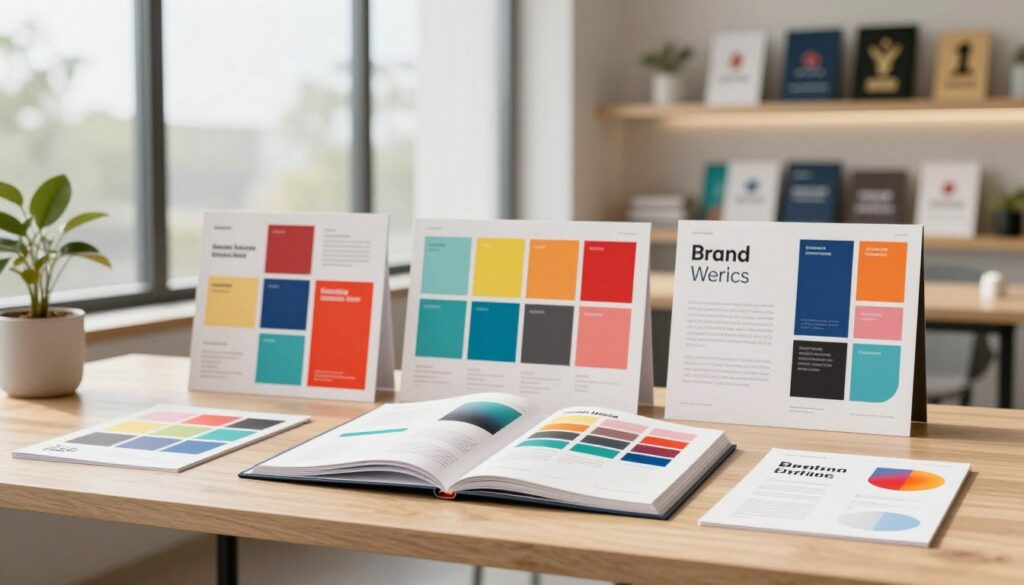
These documents provide clear usage instructions with practical examples. They show teams how to apply each component correctly in various contexts.
| Guideline Component | Description | Usage Example |
|---|---|---|
| Logo Specifications | Clear spacing, sizing, and placement rules | Minimum size requirements for digital use |
| Color Palette | Primary and secondary color codes | Hex values for web and print applications |
| Typography Standards | Approved fonts and hierarchy | Heading and body text size relationships |
| Messaging Voice | Tone and style guidelines | Customer service response templates |
Accessibility is crucial for American organizations. All team members need easy access to these resources.
The State of Brand Ownership Report found that slight deviations from core elements can cause rapid divergence across channels. Even minor changes can make a company look unprofessional.
Platforms like Frontify help companies centralize all assets in one location. This empowers teams to create on-brand content while maintaining integrity.
Crafting an Authentic Brand Voice and Messaging
Beyond visual elements, the language used in communication defines how audiences perceive an organization’s character. This verbal identity encompasses both what a company says and how it delivers the message.
Developing an authentic voice requires answering key questions about communication style. Should the tone be formal or informal? Respectful or playful? Authoritative or peer-like?
These decisions shape how American consumers connect with a company. The chosen voice must reflect core values while resonating with target audience preferences.
| Voice Characteristic | Formal Approach | Informal Approach |
|---|---|---|
| Tone Style | Professional, corporate language | Conversational, relatable phrasing |
| Audience Relationship | Authority figure to customer | Peer-to-peer communication |
| Word Choice | Technical terminology | Everyday vocabulary |
Authentic communication builds trust faster than perfect marketing.
Practical exercises help define voice traits. An organic grocery might adopt a “friendly farmer” tone. This approach shares facts about local produce while representing customer values.
Documenting voice guidelines ensures consistency across teams. Social media managers and customer service representatives should communicate with unified style.
Authentic messaging creates emotional connections with audiences. This distinguishes companies in crowded markets through distinctive communication styles.
Building a Color Palette and Visual Design That Resonates
Visual design choices create immediate emotional connections before customers read a single word. Research confirms that 62-90% of first impressions come from color and design decisions alone.
Selecting fonts and colors requires understanding both aesthetic appeal and psychological impact. American consumers respond strongly to color psychology—red conveys energy like Coca-Cola, while blue suggests trust.
Selecting Fonts and Colors
Typography contributes significantly to personality perception. Serif fonts often appear traditional, while sans-serif options feel modern. The palette should include primary and secondary colors for versatility.
| Color Choice | Emotional Response | American Brand Example |
|---|---|---|
| Bold Red | Energy, excitement, confidence | Coca-Cola |
| Warm Yellow | Optimism, friendliness, clarity | McDonald’s |
| Calming Blue | Trust, security, professionalism | |
| Natural Green | Growth, health, freshness | Whole Foods |
Design Principles for Impact
Consistency remains crucial across all applications. Headspace maintains recognition through bright colors and quirky illustrations everywhere. Paul Rand correctly noted that “Design is the silent ambassador of your brand.”
Effective design uses hierarchy, balance, and white space strategically. This approach ensures visual elements work together harmoniously to strengthen the overall identity.
Market Research and Audience Insights
Market research provides the crucial insights needed to connect with real customers. Understanding the target audience goes far beyond basic demographics. Companies must discover what drives people emotionally.
This deep understanding forms the foundation of an effective identity. Without it, businesses risk creating messaging that doesn’t resonate. The connection between company and customer remains weak.
The first step involves gathering quantitative data through surveys. This reveals demographic patterns and broad preferences. The next way forward requires qualitative research through interviews.
Sales teams and support agents offer valuable perspectives. They hear customer pain points directly. Analyzing support tickets reveals recurring issues and desires.
Beauty company Glossier demonstrated this approach perfectly. Founder Emily Weiss built her identity around blog reader feedback. This made customers feel like co-creators rather than just consumers.
Ongoing research is essential as preferences evolve. What resonates today may change tomorrow. Staying attuned to the audience ensures the identity remains relevant.
This process transforms abstract data into actionable insights. It guides decisions about mission, values, and visual elements. The result is an authentic identity that people genuinely support.
Competitive Analysis for Differentiating Your Brand
Competitive analysis goes beyond product features to examine emotional positioning. American businesses must study how rivals connect with customers through personality and values.
This process reveals what competitors do well with their public image. It also shows areas where your company can stand out. The goal is finding white space in the market’s personality landscape.

Systematically evaluate competitor identities across several dimensions. Examine their visual style, communication tone, and customer positioning. Look for patterns across multiple rivals in your industry.
Liquid Death provides a powerful example of strategic differentiation. While most water companies used calm, pure imagery, they embraced wild humor and bold sustainability messaging. This opposite approach helped them reach a $1.4 billion valuation by 2023.
Understanding competitors helps identify both successful strategies and common mistakes. This knowledge prevents businesses from repeating what already exists in the market.
Differentiation based on authentic personality creates sustainable advantage. Product features can be copied, but a genuine connection with customers cannot be easily replicated.
Implementing Social Media Strategies for Brand Promotion
The power of social networks lies in their ability to transform corporate messaging into genuine conversations with real people. These platforms serve as critical channels for expressing personality and building community around shared values.
Successful social media marketing requires strategic alignment with core business values. Each platform demands tailored approaches while maintaining consistent visual and verbal identity.
| Platform | Primary Audience | Key Strategy | Engagement Approach |
|---|---|---|---|
| 18-34 year olds | Visual storytelling | User-generated content | |
| TikTok | Gen Z & Millennials | Authentic short-form video | Trend participation |
| Twitter/X | News-focused users | Real-time conversation | Customer service focus |
| Professionals | Thought leadership | Industry insights |
Fenty Beauty demonstrates powerful social media execution. The company built its identity around inclusivity, amassing 13.2 million Instagram followers. Their strategy features creators posting authentic reviews and tutorials.
Headspace maintains perfect consistency across all channels. The meditation app uses identical visual styles on its homepage, app, and social platforms. This reinforces recognition and trust.
An organic grocery might adopt a “friendly farmer” tone. They could share facts about water usage for different produce. This approach makes complex information accessible and engaging.
Effective social media strategy turns marketing into meaningful dialogue. It makes community members feel central to the business rather than just consumers.
Measuring Brand Equity and Customer Trust
Measurement transforms abstract concepts like customer trust into actionable business intelligence. American companies use specific metrics to evaluate their market position and connection with audiences.
Brand equity represents the value customers assign based on quality perceptions. This explains why recognized names command premium pricing on platforms like Amazon.
Key Performance Indicators
Several metrics help quantify identity strength. These include awareness, recognition, recall, loyalty, and perceived quality. Research shows 26% of consumers click on ads specifically because they mention familiar names.
This demonstrates the measurable value of recognition in driving engagement. Companies track these indicators over time to assess progress.
Feedback and Iterations
Gathering customer insights requires multiple approaches. Surveys, focus groups, and social listening provide valuable perception data. Sentiment analysis reveals emotional connections.
Consistency builds trust gradually through professional presentation. The team should use measurement data to identify strengths and address weaknesses. This creates an ongoing improvement cycle.
Regular assessment ensures the identity remains relevant and effective. It transforms subjective impressions into concrete guidance for strategic decisions.
Adapting and Evolving Your Brand Identity Over Time
A company’s public image is a living entity that must grow alongside the business itself. Even the most carefully crafted identity needs regular evaluation as markets shift and customer expectations evolve.
Smart American companies schedule annual reviews of their visual presence. This ensures their public-facing character remains authentic to current values and vision.
There are two main approaches to refreshing an organizational character. Incremental updates keep core elements while refreshing specific components. Major overhauls completely reimagine how a company presents itself.
| Update Type | Common Changes | Typical Frequency | Business Impact |
|---|---|---|---|
| Incremental Refresh | Color tweaks, logo variations, tagline updates | Annual review with minor adjustments | Maintains recognition while staying current |
| Major Rebrand | Complete visual system overhaul, new positioning | Every 7-10 years on average | Significant market repositioning opportunity |
Mailchimp’s 2018 transformation demonstrates successful evolution. The company introduced a new design system while focusing heavily on internal education. This empowered teams to consistently implement the refreshed identity across all touchpoints.
The most effective updates balance innovation with familiarity. They maintain established equity while introducing contemporary elements that resonate with modern audiences.
Creating Effective Brand Templates for Team Engagement
When employees become active participants in shaping company expression, remarkable consistency emerges. Many American organizations still treat visual standards as a marketing-only responsibility. This approach misses the opportunity for genuine team engagement.
Empowering Employees Through Brand Tools
Digital templates provide the perfect solution for balancing creativity with consistency. They give people the tools to create professional materials without design expertise. This empowerment creates genuine ownership over brand-related work.
SRF demonstrates this approach successfully. The company equipped 200 social media creators with digital templates. These team members now produce on-brand assets without designer support.
Effective templates cover common materials that employees use regularly. They provide structure while allowing creative flexibility. This balance ensures consistency without constraining expression.
| Template Type | Primary Users | Key Benefits |
|---|---|---|
| Social Media Graphics | Marketing & Communications | Quick content creation, visual consistency |
| Presentation Decks | Sales & Leadership | Professional appearance, time savings |
| Newsletter Layouts | Internal Communications | Brand alignment, easy updates |
| Proposal Templates | Business Development | Consistent messaging, faster turnaround |
When everyone understands the why behind visual standards, compliance becomes natural. Team members feel invested in maintaining the company’s public image. This collective effort produces more authentic customer connections.
How to Build a Strong Brand Identity
Building a powerful organizational presence starts with deep customer understanding. Companies should assess their current position by analyzing recent marketing materials and competitor strategies.
The process involves gathering internal stakeholder opinions across departments. Different teams often perceive the company’s character differently, revealing valuable insights.
Developing authentic communication style is crucial. This voice should reflect company personality while resonating with target audience expectations.
Design elements like colorful logos can increase recognition by up to 80%. A cohesive visual system includes thoughtful color palette and typography selections.
Clear value proposition and mission statements articulate what makes the organization unique. Documentation through comprehensive guidelines ensures team-wide consistency.
Nike demonstrates successful alignment between product strategy and core purpose. Their inclusive product ranges reflect their mission to serve every athlete.
Implementation requires rolling out the new framework across all customer touchpoints. This ongoing process needs consistent measurement and evolution over time.
Conclusion
Crafting a compelling public persona requires collective effort across the entire organization. This framework cannot be built by marketing teams alone or developed overnight.
Authentic character development demands significant time investment from discovery through implementation. The process must reflect genuine company values rather than copying competitors.
A strong brand identity delivers increased recognition, customer trust, and competitive differentiation. This strategic asset creates emotional connections that drive long-term value.
This guide provides American businesses with the knowledge to build an identity that resonates with their audience. The framework supports sustainable growth through consistent, authentic expression.